Why reactive balls 'die'
Reactive coverstocks are slightly porous, so over months of play they absorb oil from the lane. That absorbed oil dulls the surface's grip, and the ball gradually loses its hook. A 'dead' ball is usually not worn out — it's saturated. See how the coverstock works in how balls work.
Routine cleaning (do this often)
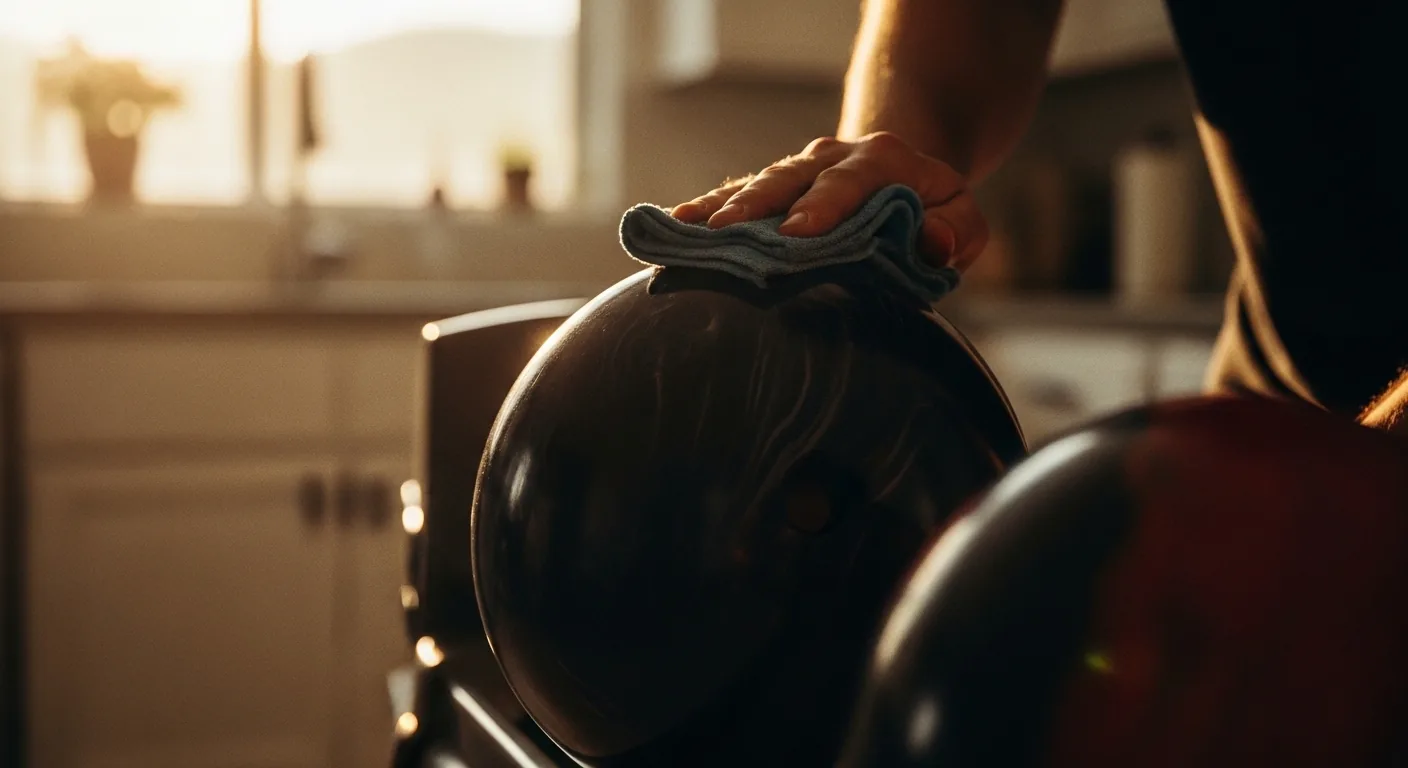
The simplest habit: wipe the ball with a microfiber towel between shots to remove surface oil, and use a proper ball cleaner after every session before the oil soaks in. This alone dramatically extends how long a ball keeps its reaction. See the maintenance schedule.
Reviving an oil-soaked ball
For a ball that's already dulled, you need to pull the absorbed oil back out. A common at-home method is a careful, manufacturer-approved warm-water bath — but it must be done within the temperature limits the maker specifies, because too-hot water can damage or warp a ball. When in doubt, a pro shop's oil-extraction (oven) service does it safely.
Don't overheat it
This is the one warning that matters: bowling balls are sensitive to heat. Never use water hotter than the manufacturer allows, never leave a ball in a hot car, and never improvise with high heat to 'speed up' oil removal. Patience and the right temperature protect your investment.
When cleaning isn't enough
If a ball is cleaned and de-oiled but still flat, the surface may need refreshing — a re-sand or polish to restore the texture, often paired with the oil extraction. A pro-shop resurface can make an old ball react close to new for far less than a replacement. Full detail in surface prep.
Stock the basics
A microfiber towel and a proper ball cleaner are the two cheap items that keep your ball alive. See what's worth owning in accessories.