The basic idea
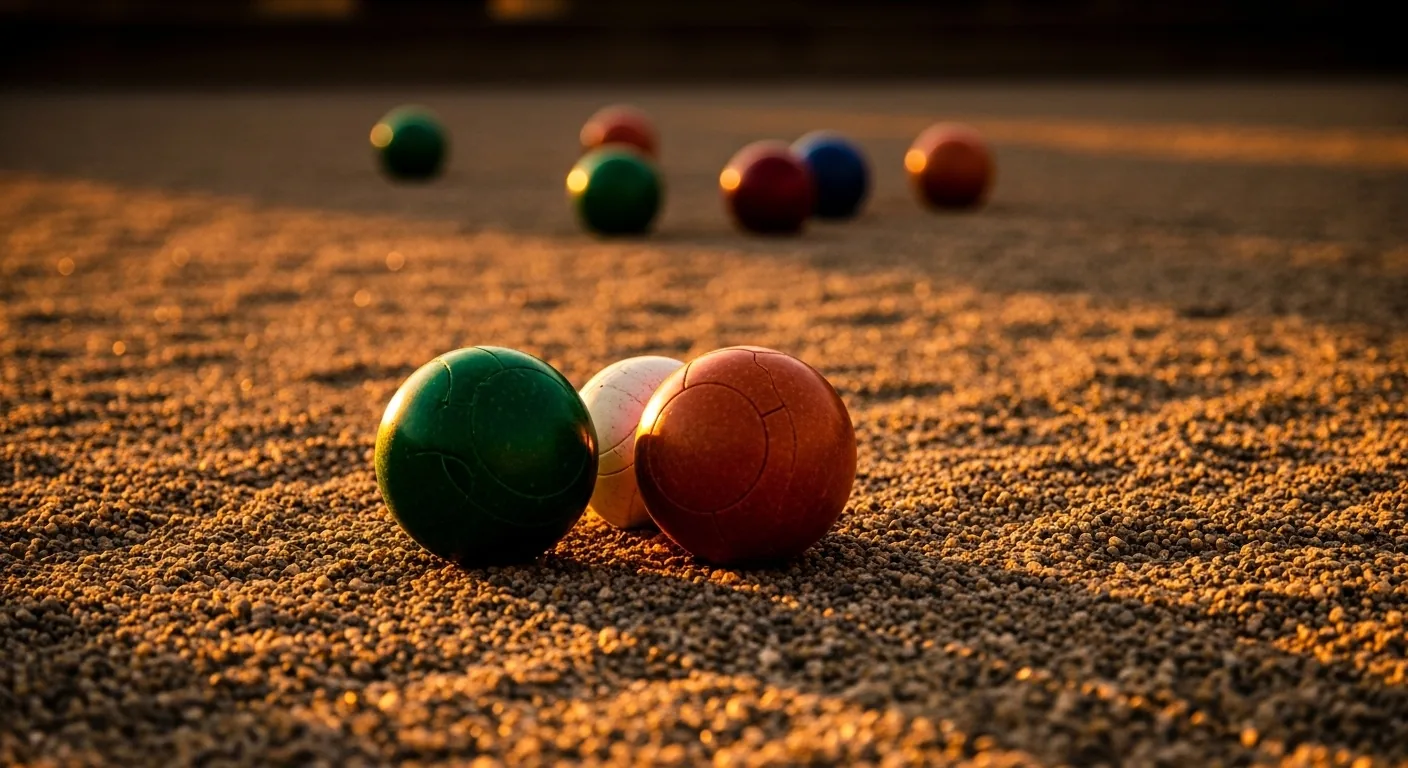
Bocce is a target game. A small ball called the pallino (or jack) is thrown out first; players then roll their larger bocce balls, trying to land them as close to the pallino as possible. The closer your balls are to the pallino than your opponent's, the more points you score. Simple to grasp, endlessly nuanced in execution.
Scoring
After each frame (once all balls are rolled), only one team scores — the team with the ball or balls closest to the pallino. You earn a point for each of your balls that is closer to the pallino than the opponent's nearest ball. Games are typically played to a set winning total. Because only the leading team scores per frame, positioning and defense matter enormously.
Strategy: pointing and hitting
Bocce's depth comes from two basic shot types. Pointing is a gentle roll to nestle your ball near the pallino. Hitting (or 'spocking') is a harder throw to knock an opponent's ball away — or to blast the pallino itself to a new position. Deciding when to point and when to hit, and managing the cluster of balls, is the strategic heart of the game.
Court and casual play
Formal bocce is played on a long, narrow court with boundaries and sometimes raised sides for bank shots. But part of bocce's charm is that it's wonderfully forgiving of setting — a backyard, a park, or a beach works fine for casual play. This accessibility, like bowling's, is a big reason for its enduring popularity.
Bocce's place in the family
Bocce descends from the ancient lawn-and-ground rolling games of the Mediterranean and shares its lineage with games like lawn bowls and French pétanque. It's a reminder that 'rolling a ball toward a target' is one of the oldest games humans play — the same instinct that, on a wooden lane with pins, became bowling. See the shared roots in our origins guide.