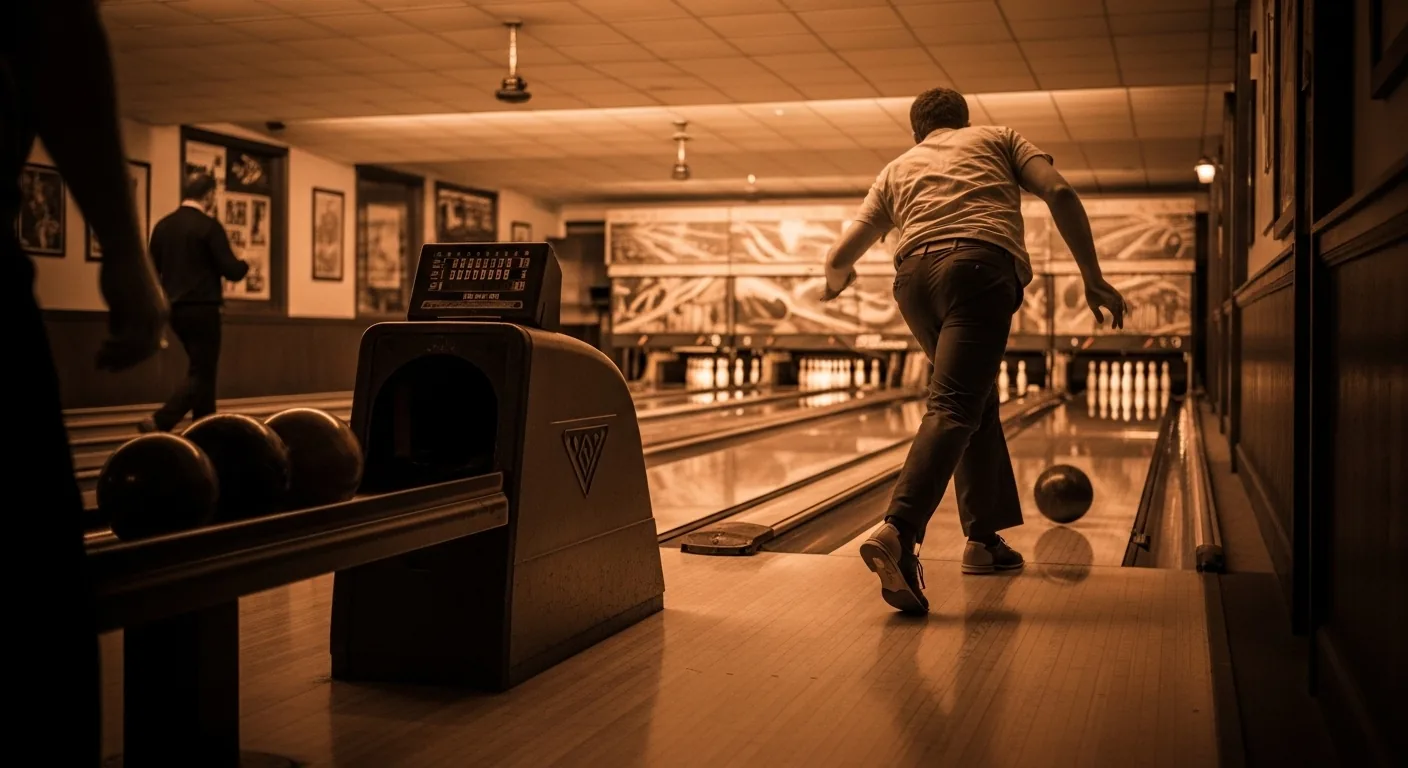
Read the four chapters below in order and a pattern appears: every big change in bowling came from equipment or technology, not from the rules. Rolling a ball at a target is ancient; the ten-pin triangle, the wooden lane, the rubber ball, the automatic pinsetter and reactive resin each remade the game in turn, and each left a trace you can still see in a modern center, from the arrows on the lane to the weight of the ball in your hand. The rules, by contrast, have barely moved in a century: a strike is still ten plus two balls, and a perfect game is still 300.
The same story runs through the wider family. Nine-pin is the older game that tenpin grew out of; candlepin, duckpin and five-pin branched off in the last 150 years, and each kept its own pins and balls; the bowling family section covers each of them with their governing bodies’ rules, and the glossary explains the terms you will meet along the way.