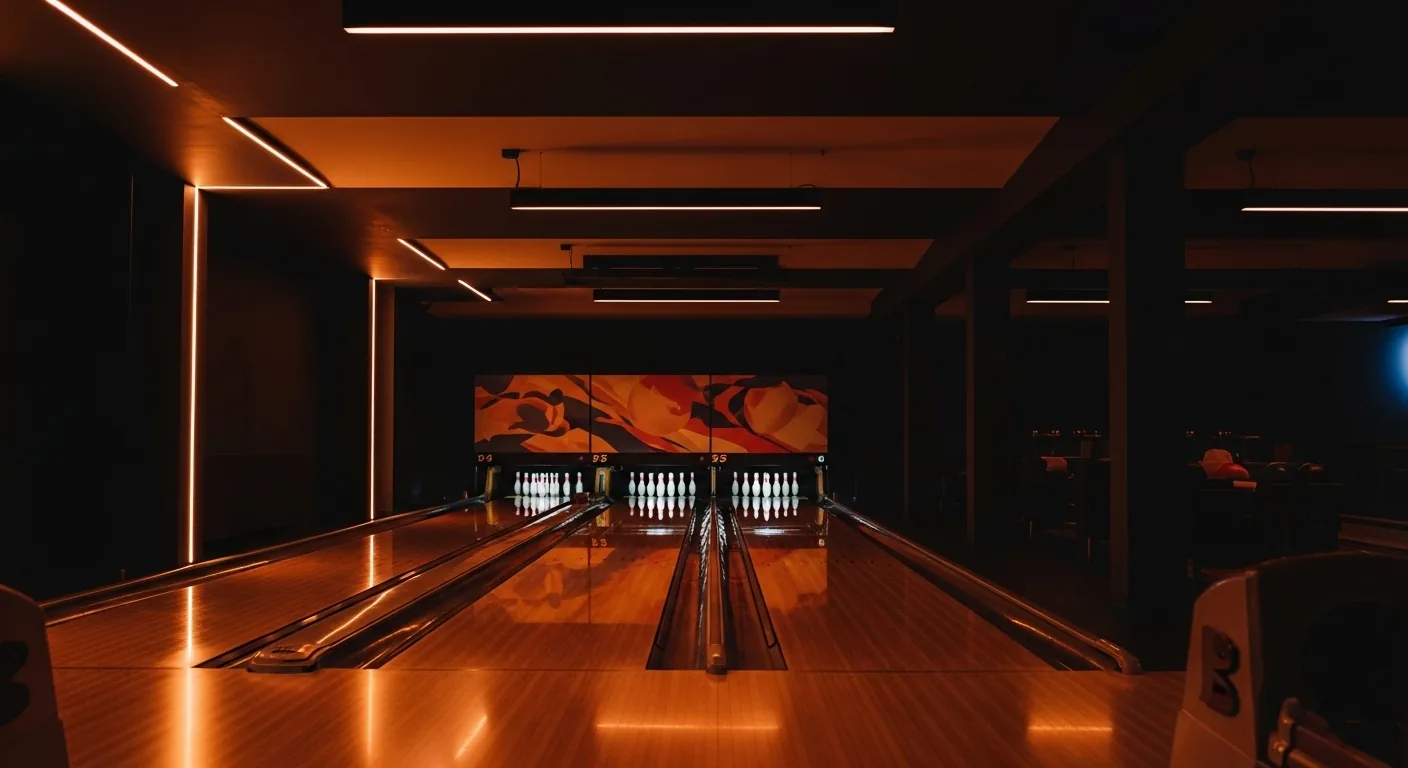
The automatic pinsetter
For most of bowling's history, pinboys set the pins by hand — a labor-intensive bottleneck that limited where and how much bowling could happen. The automatic pinsetter changed the economics entirely, mechanizing pin resetting and ball return. Suddenly a center could run more lanes reliably, cheaply, and late into the night, fueling rapid expansion.
The mid-century boom
With pinsetters and rising postwar leisure time, bowling centers spread rapidly. Bowling became a social institution — leagues for workplaces, churches, and neighborhoods filled lanes weekly. The center itself evolved into a family-friendly destination with seating, food, and a welcoming atmosphere, far from the game's rougher early reputation.
The televised golden age
Bowling translated beautifully to early television: simple to follow, dramatic in its tension, and quick in its outcomes. Televised bowling drew large audiences and turned top bowlers into recognizable stars. For a stretch of the twentieth century, professional bowling was genuinely popular prime-time sports entertainment.
Professional bowling
Organized professional bowling gave the sport its competitive pinnacle, with touring players competing on demanding lane conditions for titles and prize money. The professional game also drove equipment and technique innovation, and its tougher 'sport' lane patterns stand in deliberate contrast to the forgiving 'house' shots recreational bowlers see — a distinction explored in lane play.
Bowling today
The sport has ridden waves of popularity since, with league participation patterns shifting and centers reinventing themselves with modern amenities. But the fundamentals endure: millions still bowl, the equipment keeps advancing, and the game remains one of the most accessible sports there is — easy to try, endlessly deep to master. And its ancient cousins still roll on, which is why we document the whole family.