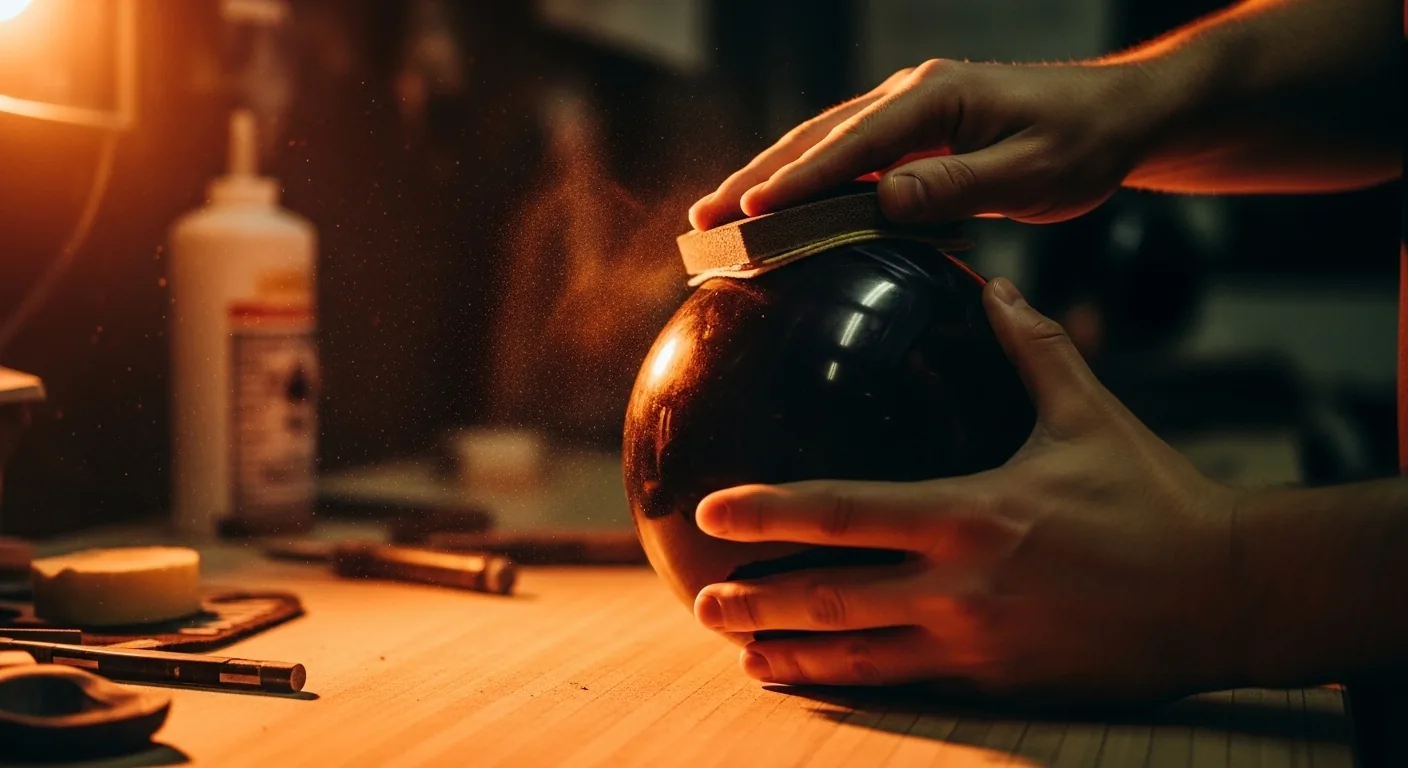
Surface = reaction
As covered in the bowling balls deep-dive, a ball's surface finish controls when and how much it grips the lane. A sanded/matte surface grips earlier and reads the midlane; a polished/shiny surface skids longer and reacts later on the back end. Changing the surface changes the ball's whole personality.
Grit explained
Surface is measured in grit (and by abrasive-pad systems). Lower grit = rougher = earlier, stronger grip in oil. Higher grit or polish = smoother = more length and later reaction. A ball that's hooking too early on a fresh pattern might be smoothed; a ball skidding too far on dry lanes might be roughed up. Many bowlers keep a single ball and adjust its surface to match conditions rather than buying multiples.
Doing it yourself
With abrasive pads (and optionally a spinner), you can re-sand or polish a ball at home. The basics: clean the ball first, apply even pressure, rotate the ball to hit the whole surface, and work systematically through grits. Consistency matters — uneven surface means uneven reaction. Many pro shops will do it inexpensively if you'd rather not.
Removing absorbed oil
Reactive coverstocks are porous and slowly absorb oil from the lane, which dulls their grip over months of play. Surface cleaners remove surface oil; for deeper restoration, methods like a controlled hot-water bath (done carefully and within manufacturer guidance) or a pro-shop oil-extraction service pull oil back out of the pores and revive the reaction. A ball that's 'died' is often just oil-soaked, not worn out.
Resurfacing
Over time, lane wear leaves tracks and scratches. A full resurface on a pro-shop spinner brings the ball back to a uniform, fresh surface. Combined with oil removal, resurfacing can make an old ball react close to new — far cheaper than replacing it. A reactive ball that's well maintained lasts far longer than a neglected one.