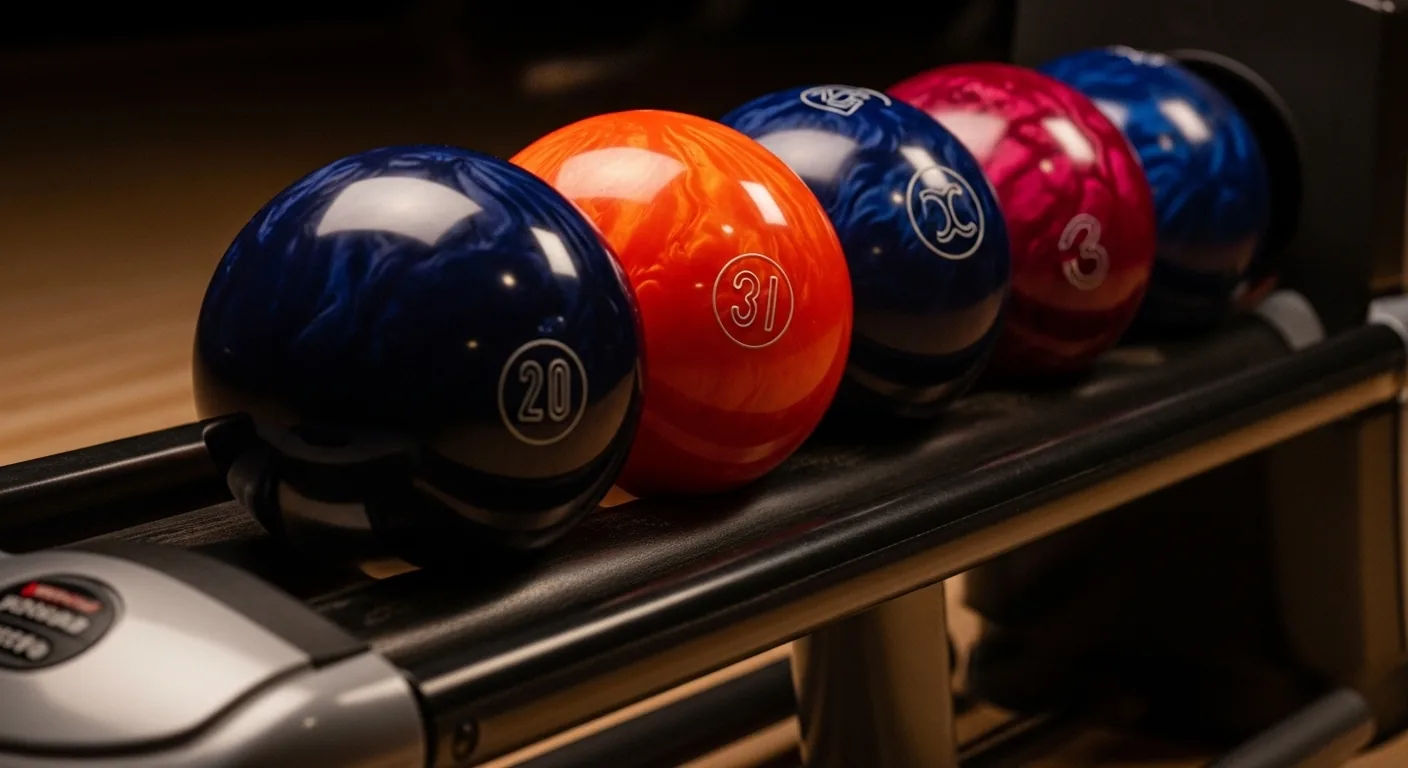
Coverstock: the outer shell
The coverstock is what touches the lane, making it the biggest single factor in ball reaction. There are three main families:
- Plastic / polyester: hard and smooth, almost no hook. Cheap, durable, and ideal as a dedicated spare ball.
- Urethane: softer than plastic, with a smooth, controllable, predictable hook. Beloved for control and enjoying a major revival on tough patterns.
- Reactive resin: porous and tacky, gripping the lane far more for a strong, often angular hook. The default for modern strike balls, with sub-types (solid, pearl, hybrid) that tune the timing and shape of the reaction.
Reactive sub-types
Within reactive resin: solid covers read the lane earliest and grip the most oil; pearl covers (with mica added) skid longer and react sharper on the back end; hybrid covers blend the two for a balanced, versatile motion. This is why two reactive balls can feel completely different.
The core: the weight block
Inside the ball, the core (weight block) shapes how the ball revs up and transitions. Cores come in two broad types: symmetric cores produce smooth, predictable, controllable motion; asymmetric cores create a more defined, angular breakpoint and stronger overall shape. The core is why a ball can 'rev up' and change direction the way it does.
RG and differential
Two numbers describe a core's behavior:
- RG (radius of gyration): how the mass is distributed. Low RG balls rev up earlier (good for more length-of-lane roll); high RG balls store energy and rev later. Roughly: low RG = earlier roll, high RG = later, longer.
- Differential: the difference between the ball's high and low RG values, which governs how much the ball flares and hooks. Higher differential = more track flare and hook potential; lower = smoother, more controlled.
You don't need to memorize these, but knowing them lets you decode any ball's spec sheet.
Surface: the tuning dial
The factory surface finish — polished (shiny) or sanded (matte, by grit) — dramatically changes reaction. A sanded surface grips earlier and reads the midlane; a polished surface skids longer and reacts later. Crucially, surface is adjustable: a pro shop (or you, with the right pads) can re-sand or polish a ball to change its motion. This is the cheapest way to change how a ball reacts — see surface prep.
Building an arsenal
This is why serious bowlers carry several balls. A typical progression: a plastic spare ball for corners, a benchmark reactive ball (smooth, predictable, your go-to read), a strong oil ball for heavy patterns, and a length/control ball for drier lanes. You don't need all of these to start — one good reactive ball plus a plastic spare ball covers most league bowlers for a long time. See our beginner picks and hook ball picks.
Shopping for a ball?
Our beginner ball guide and hook ball guide translate all of this into specific picks across budgets.