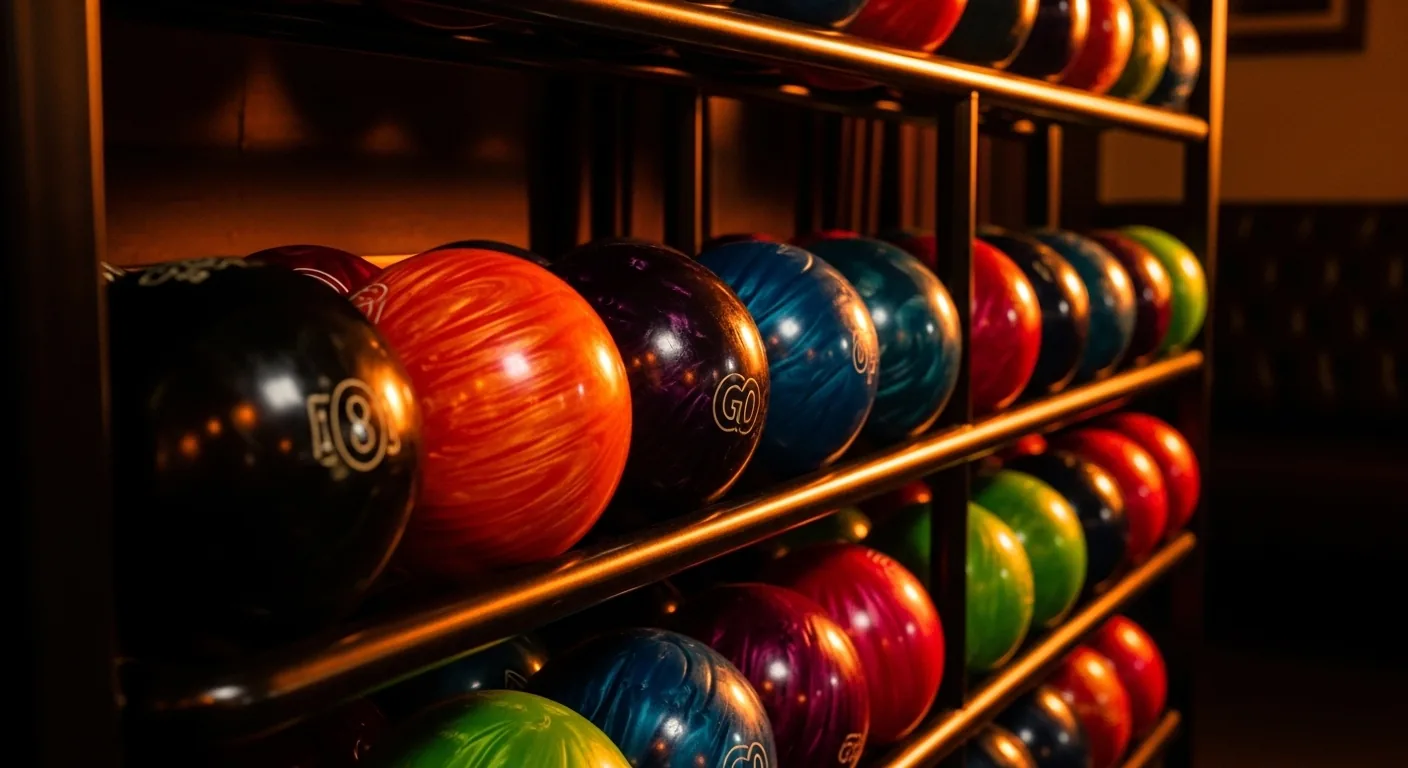
House ball vs. your own
A house ball is the center's communal ball, drilled with generic finger spans and made of a hard plastic that barely hooks. It's free, it's fine for starting out, and its straight roll is forgiving. The downside: the fit is never quite yours, and the plastic coverstock limits how much the ball can hook into the pocket.
Your own ball is drilled to your exact hand and (usually) made of a reactive material that grips the lane and hooks. A proper fit reduces strain, improves accuracy, and lets you develop real technique.
Finding the right weight
The old guideline of roughly ten percent of body weight (to a 16-pound max) is a fine starting point, but comfort wins. Hold a candidate ball in your stance position and let your arm hang — if your wrist or shoulder strains, go lighter. Most adults land between 12 and 15 pounds. A ball that's slightly too light beats one that's too heavy for your release.
Why fit matters most
The single biggest upgrade from house to personal isn't the fancy coverstock — it's the fit. A pro shop measures your span (the distance from thumb to finger holes) and pitch (the angle of the holes) so the ball stays on your hand through the swing and releases cleanly. A fitted ball you can hold relaxed transforms timing and accuracy. This alone is worth the trip to a pro shop.
Plastic, urethane, or reactive?
Your first ball is usually one of two choices: a plastic/polyester ball (cheap, straight, doubles as a dedicated spare ball), or an entry-level reactive resin ball that hooks. Many new bowlers buy an affordable reactive ball as their main strike ball and keep a plastic ball for shooting spares. The materials are explained fully in our bowling balls deep-dive.
When to make the jump
Buy your own ball when you're bowling regularly (a league, or more than a couple times a month), when house balls feel limiting, or when you want to learn to hook. The combination of a fitted entry-level reactive ball plus a pro-shop fitting is the highest-value purchase in the sport for an improving bowler.
Ready to buy?
See our budget-by-budget best balls for beginners guide for specific picks.