Dates change — always confirm
Tournament dates, entry windows, and fees change every year. This is an evergreen guide to what these events are and how to approach them — for current dates and registration, always check the official organizer's site (linked in each section). Treat anything here as orientation, not a live schedule.
You're more eligible than you think
The biggest myth is that tournaments are only for elite bowlers. In reality, the largest events are participatory — open to amateurs of all levels, with divisions that group bowlers by average so everyone competes fairly. If you carry a league average, there's almost certainly a tournament and division for you.
Understand divisions and averages
Most amateur tournaments split bowlers into divisions by average — for example a top division for higher averages, a middle division, and an entry division for lower averages. You enter the division your average qualifies for, so you're matched against comparable bowlers. You'll need an established average (usually from a sanctioned league) to enter most events. Learn how averages and handicap work via our handicap calculator.
Scratch vs. handicap events
Tournaments are either scratch (raw scores, no adjustment — favors stronger bowlers) or handicap (a per-game bonus levels the field so anyone can win). Beginners usually start with handicap events, where a good night genuinely competes. See the full breakdown in types of tournaments.
How registration works
Entry is typically online or by mailed form ahead of the event, with an entry fee that covers lane time and the prize fund. Big championships have long entry windows and let you pick your bowling date and time; smaller local tournaments may be same-day sign-ups. Always register through the official organizer and read the rules sheet — every tournament has its own specifics.
Sanctioning and membership
Many tournaments require membership in a sanctioning body (in the US, the United States Bowling Congress) — the same membership that tracks your league average. It's inexpensive and often something your league already enrolled you in. Check each event's requirements when you register.
What to expect on the day
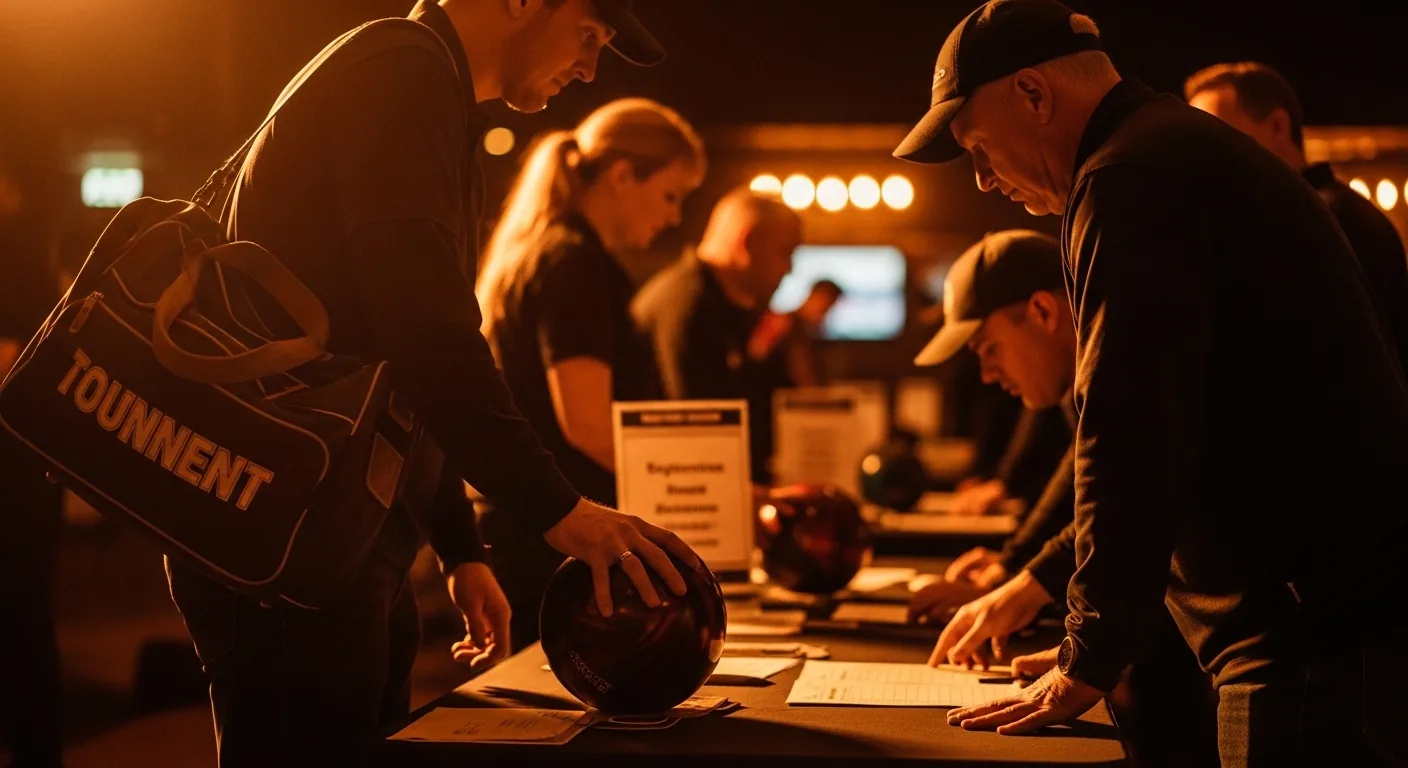
- Arrive early to check in, find your lane assignment, and warm up during the practice period.
- Bring your own gear if you have it — your ball, shoes, and a bag. A plastic spare ball is especially handy under pressure.
- Expect a fresh oil pattern that may play tougher than your home house shot — read it early (see oil patterns).
- Bowl your game, shake hands, and enjoy it. Your first tournament is about the experience as much as the score.
Building toward bigger events
Once you've done a local tournament, the path opens up: regional events, then bucket-list championships like the USBC Open Championships at the National Bowling Stadium in Reno — which doubles as a great destination trip (see plan a bowling trip).
Gear up for competition
A fitted ball, your own shoes, and a plastic spare ball are the competitive essentials. Start with our buying guides.