The approach
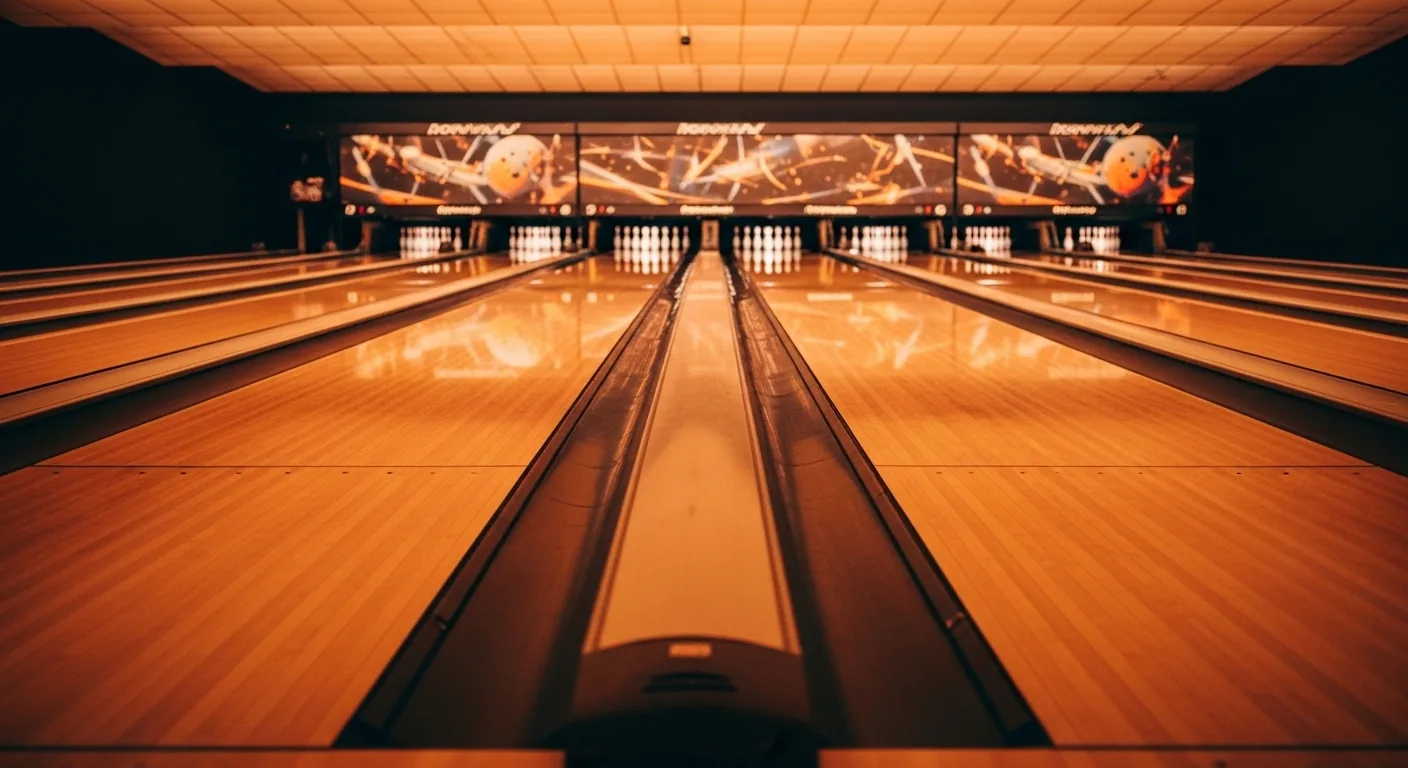
The approach is the roughly 15-foot area behind the foul line where you take your steps. It has locator dots set into it that you use to position your feet. A clean, consistent approach is essential — which is why etiquette insists on bowling shoes and no drinks.
The foul line and lane length
The foul line marks the start of the lane. From the foul line to the head pin is 60 feet. The lane itself is about 41.5 inches wide. Cross the foul line and your shot is a foul (zero pins).
The 39 boards
The lane is made of 39 boards running its length. Bowlers count boards from the edge (board 1 on the far right for a righty) to locate their target and starting position precisely. 'Standing on 20, targeting 10' is board-talk for exactly where your feet and aim are. The center board is 20.
The arrows
About 15 feet past the foul line sit seven arrows (also called darts or dovetails), arranged in a triangle. They're your near-target — far easier to hit than the pins 45 more feet away. The arrows sit on boards 5, 10, 15, 20, 25, 30 and 35. Most bowlers aim at an arrow, not the pins.
Pin numbering and the rack
The ten pins are numbered 1 through 10, front to back, left to right. The 1 pin (head pin) is at the front. Behind it: the 2 and 3. Then the 4, 5, 6. Then the back row, 7-8-9-10. Knowing the numbers lets you talk about spares — 'the 7-10 split' is the two corner pins in the back row, bowling's most infamous leave.
The pocket
The pocket is the target zone for a strike: the gap between the 1 and 3 pins for a right-hander (1 and 2 for a lefty). A ball entering the pocket at a good angle sets off a chain reaction that clears all ten. Hitting the pocket consistently is the central goal of lane play.
Oil patterns
This is the hidden part most casual bowlers never learn: lanes are coated with a layer of oil (lane conditioner) in deliberate patterns. Oil reduces friction, so where there's more oil the ball slides; where there's less (typically the last 15-ish feet near the pins, and the outside edges) the ball grips and hooks. The pattern shapes how every ball travels. House patterns are forgiving; sport patterns are flat and demanding. Reading and playing the oil is the deepest skill in the sport — start with lane play.