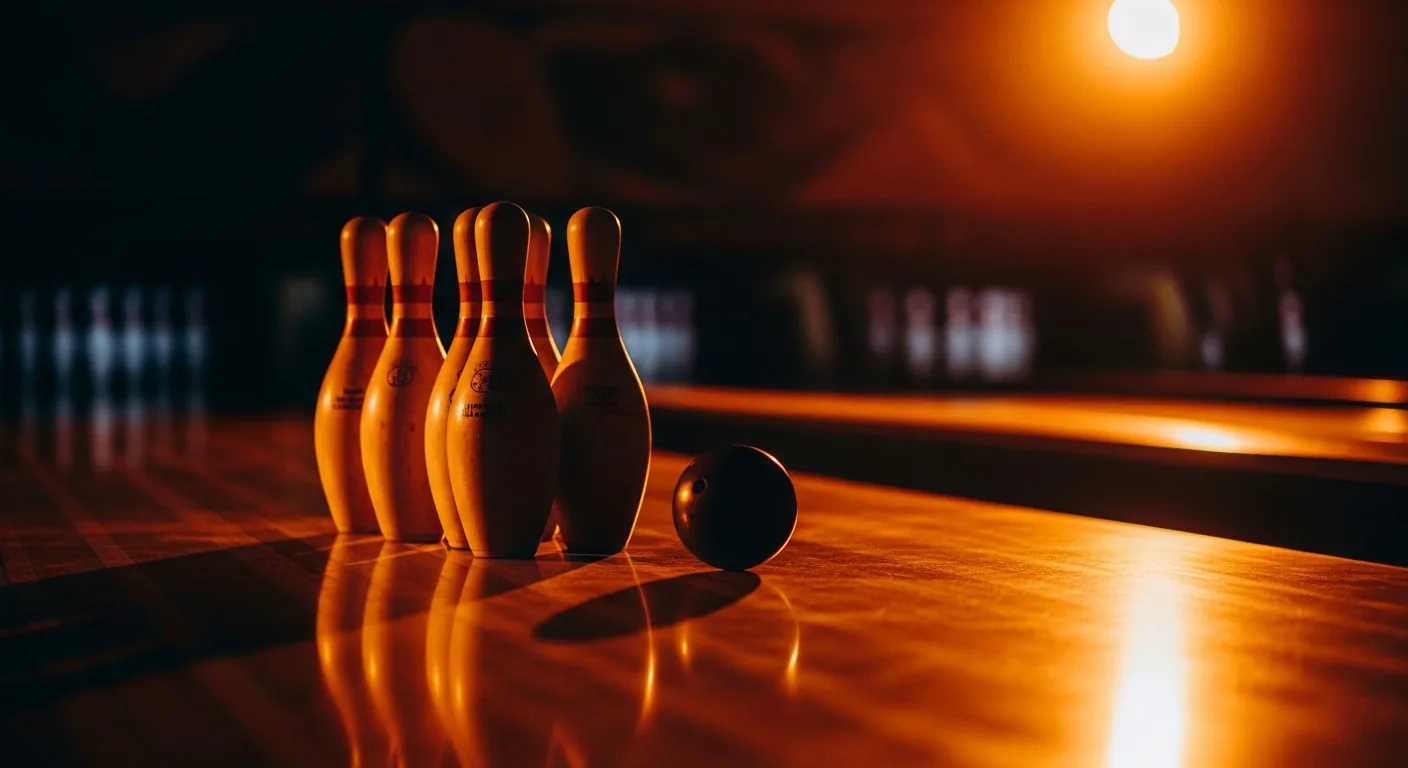
Why five pins
Five-pin was developed in Canada in the early twentieth century, reportedly in response to customers wanting a lighter, quicker game than tenpin. The solution: fewer, smaller pins and a small handheld ball (no finger holes) that's easier on the arm and faster to play. The result caught on widely across Canada.
The pins and their values
Five-pin uses, fittingly, five pins arranged in a V. A defining feature is that the pins are worth different point values — the center pin is worth the most, with decreasing values out to the corners. This means knocking down all five isn't just about count; it's a built-in scoring strategy, and a 'perfect' frame has a specific maximum value.
Pin bands
Modern five-pins typically wear a rubber band around their middle, which makes them livelier and helps them scatter and travel — adding action to the game. It's a small engineering touch that gives five-pin its characteristic feel.
Three balls per frame
Like the other small-ball games, five-pin allows three balls per frame. Combined with the point-value pins, this gives the scoring a distinct rhythm and strategy compared to tenpin's all-or-nothing pinfall.
A national pastime
Five-pin remains popular across Canada in leagues and casual play, a homegrown game that sits comfortably alongside the imported tenpin. It's a perfect example of how local invention added a whole new branch to bowling's family — the same spirit of regional variation you see in candlepin and duckpin.