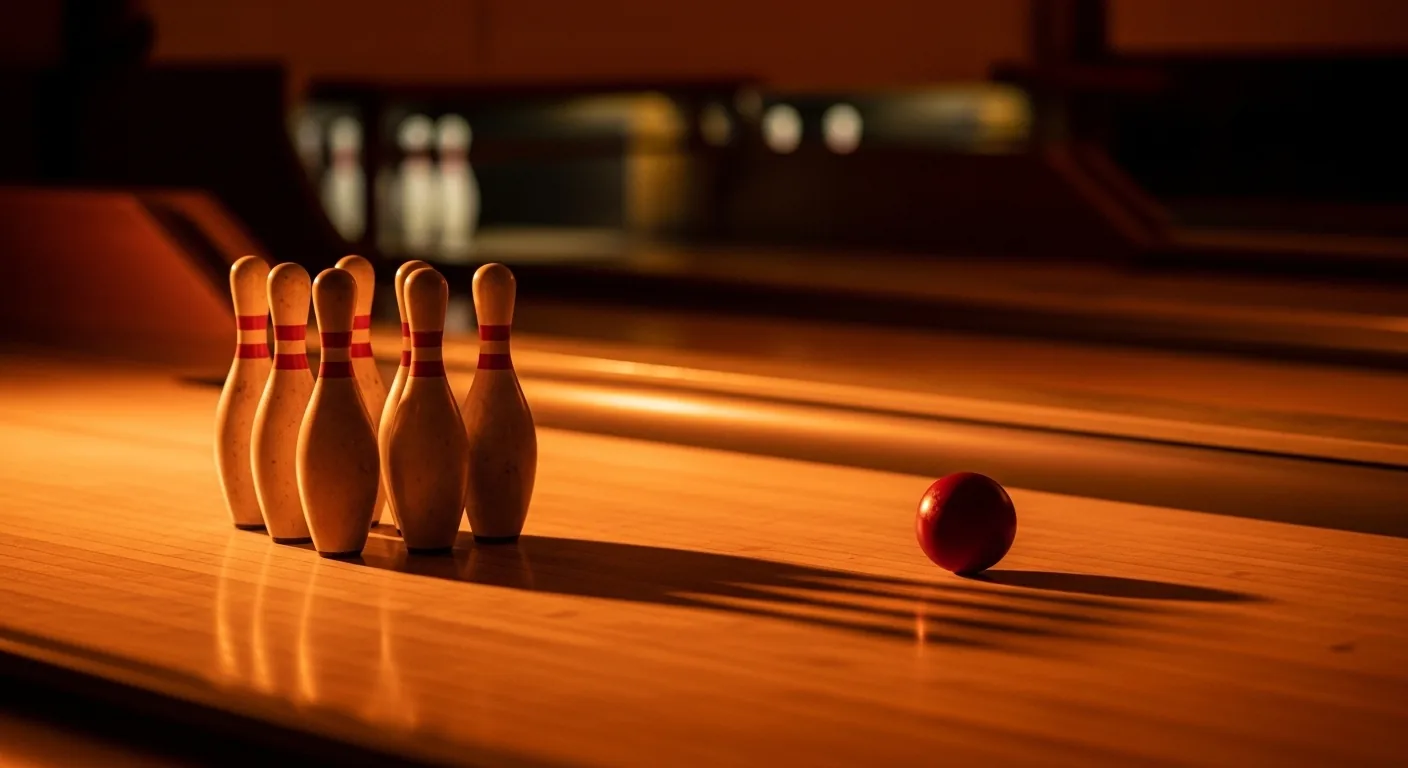
The pins are skinny
Candlepins are tall, thin, and nearly cylindrical — shaped a bit like candles, hence the name. They're a world away from the fat tenpins you know, and knocking them all down is genuinely hard.
The ball fits in your hand
There are no finger holes. The candlepin ball is small and light — you cradle it in your palm. Because it's so light relative to the pins, candlepin is famously difficult; a perfect game is extraordinarily rare.
You get three balls a frame
To balance the difficulty, you roll three balls per frame instead of tenpin's two. Strikes and spares still exist, but they're hard-won and prized.
The fallen wood stays
Here's the rule that makes candlepin unique: knocked-down pins, called 'wood,' are not cleared between your balls. They stay on the lane and become part of the game — you can carom your next ball off the wood to take out standing pins. Every frame becomes a little geometry puzzle.
Where to find it
Candlepin is concentrated in New England and the Canadian Maritimes, with a deeply local, almost familial culture. If you're ever in the region, find a candlepin house and try it — it's a completely different game under the same name. Dive deeper in our candlepin reference, or explore the whole rolling family.